Haifa Tea House
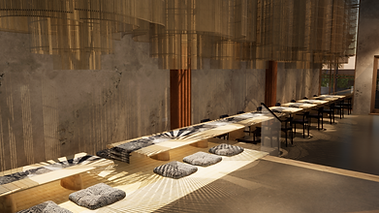
The Haifa Tea House reimagines Japanese design through Zen principles of path (roji) and ceremonial sequence. The space features three zones: formal dining, tatami seating with garden views, and a gallery with tearoom.
Materials contrast ceramic finishes with warm bamboo and linen, embracing wabi-sabi aesthetics. Diffused bamboo lighting creates intimacy beneath the tall ceiling, casting dynamic shadows that enhance the distinctive spatial experience.
Planning and designing in Revit and TwinMotion


MEZANINE FLOOR PLAN
GROUND FLOOR PLAN
Design and Planning Characteristics of the Haifa Tea House
This project concerns the renovation of an existing structure measuring 12 meters in length and 6 meters in height, proposed as a unique tea house in Haifa's Port.
The project reinterprets traditional Japanese tea house principles through a contemporary Haifa context, integrating Zen-based spatial mindfulness, sensory experience, and the ritual sequence of the tea ceremony (roji and chadōgu).
The spatial layout is divided into three distinct functional zones:


Dining Area: combining service points and formal seating areas, connected through a defined experiential path.
Low Seating Area: featuring ergonomic soft seating elements, allowing views of a Zen garden or the urban landscape, and creating a dialogue between interior and exterior.
Gallery Level: housing a traditional tea room, an educational space for workshops and instruction, and a curated exhibition of tea art.
The material concept is based on a harmonious duality between cool and warm elements. The primary cladding consists of ceramic-finish microtopping, integrated with birch wood and bamboo elements that create a warm material presence.
n the low seating area, tatami mat modules are installed within wooden frames, accompanied by a no-shoes policy, fostering an intimate and clean atmosphere.
Despite the significant height of the space (6 meters), a sense of intimacy is achieved through diffused bamboo lighting fixtures, which visually lower the perceived ceiling without compromising the spatial openness. The dynamic shadows created by the lighting add depth and complexity to the spatial experience, enhancing the unique and uplifting atmosphere.



Technical Drawings


